
Bringing home a kitten is one of the most exciting days of your life — and, if we're being honest, one of the most chaotic. That tiny ball of fluff will explore every corner of your house, test every boundary you own, and probably cry at 3 a.m. just to check you're still there. The good news: a little preparation turns that chaos into a genuinely smooth first week. This checklist walks you through exactly what to buy, how to set up a safe starter room, and what to expect day by day, so your kitten's first seven days feel like an adventure instead of a scramble.
Before Your Kitten Arrives: The Shopping Checklist
You don't need a pet store's entire inventory on day one. You need the right basics, bought once and bought well. Here is the first-week shopping list that covers everything without wasting money on gadgets your kitten will ignore.
The non-negotiable essentials
- Kitten food: Ask the shelter or breeder exactly what the kitten has been eating and buy a small bag of the same food. A sudden diet switch is the fastest route to an upset stomach in week one — you can transition to your preferred brand gradually later.
- Food and water bowls: Two shallow, wide bowls (whisker-friendly) or a simple stainless-steel set. Place them away from the litter box — cats dislike eating near their toilet.
- Litter box and litter: One open, low-sided box for now — kittens need easy access. Buy the same litter the kitten used before, and a litter scoop. Unscented litter is the safest default choice.
- A carrier: A sturdy hard-sided carrier for the ride home and future trips. Leave it open in the room with a soft blanket inside so it becomes a safe hideout, not a scary box.
- A scratching post: Even a basic vertical sisal post saves your sofa. Kittens scratch to stretch and mark territory — give them something legal to destroy from day one.
- Interactive toys: A feather wand and two or three small toys (crinkle balls, a mouse toy). Kittens play in bursts, so rotate toys rather than leaving all of them out at once.
- A cozy bed or blanket: Kittens sleep up to 18 hours a day. A soft bed in a quiet corner gives them a warm anchor point in their new territory.
What you can skip for now
Hold off on the fancy window hammock, the automatic feeder, and the wardrobe of costumes. Buy those in month two, once you know your kitten's habits. The one exception: a second litter box if you live in a two-story home. The rule of thumb is one box per cat plus one extra — but during week one, one box in the starter room is enough.
Set Up the Kitten's Safe Room (Do This Before Pickup)
Don't give a new kitten the run of the whole house on day one. Set up one small room — a spare bedroom or a quiet corner of your living room — as their starter territory. A smaller space feels safer to a kitten, and it makes litter-box training almost foolproof.
Arrange the room like this: litter box in one corner, food and water in the opposite corner, the scratching post nearby, the bed tucked into the quietest spot, and a couple of hiding places (an open box, the carrier). Keep the door closed for the first day or two and let the kitten come to you rather than scooping them up constantly. Pet-proofing room by room becomes much easier when you secure this one space first and expand later.
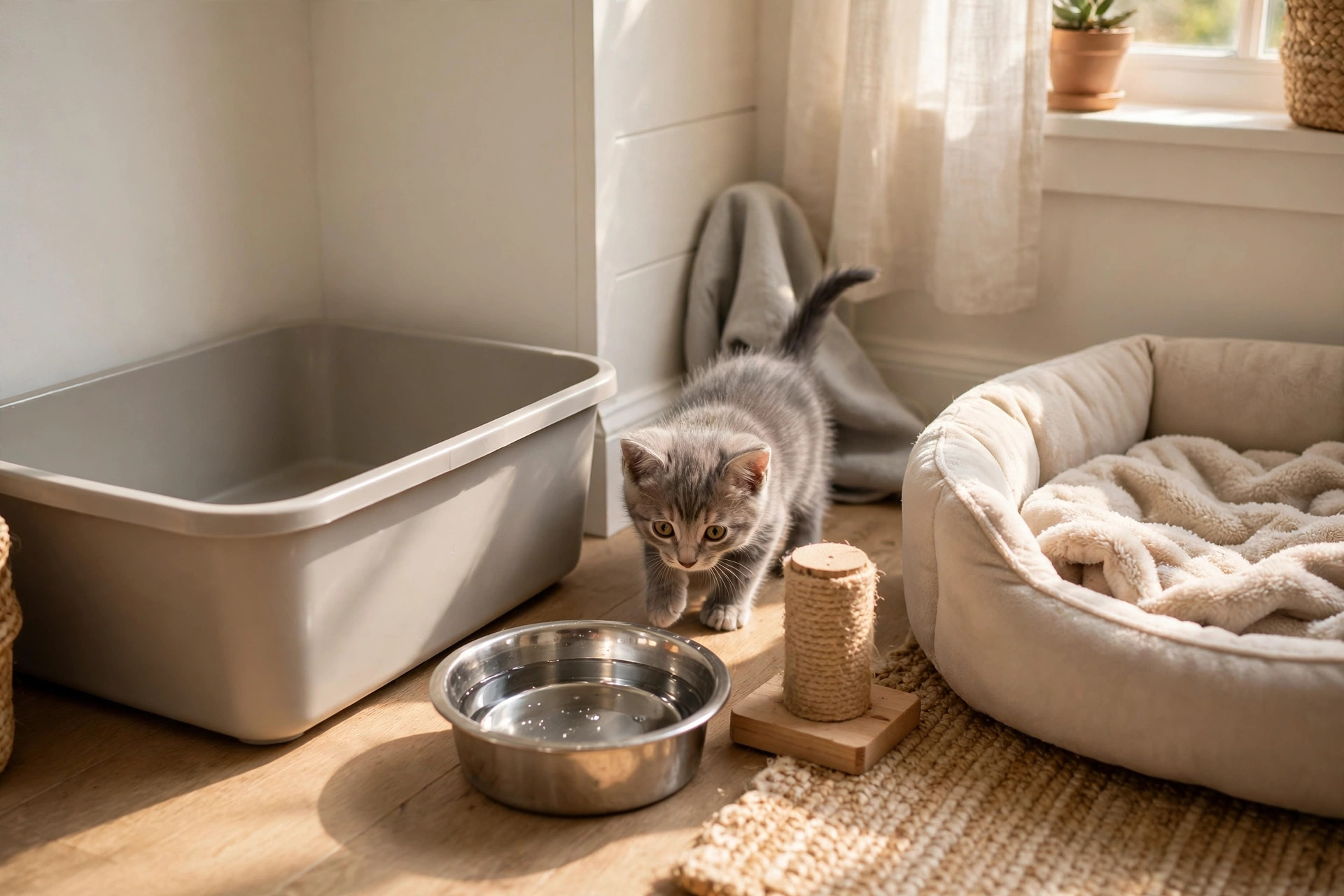
Litter box basics for week one
Scoop daily, keep the litter about 2–3 inches deep, and don't move the box around — consistency is everything. If you're wondering how many boxes you'll eventually need and where to put them, the Litter Box Calculator gives you a quick answer based on your home layout.
The First 24 Hours: What to Expect
The ride home is stressful for kittens, so keep it calm: carrier on a stable seat, no loud music, no showing-off detours. Once home, place the carrier in the safe room, open the door, and step back. Most kittens do one of two things — boldly march out and start sniffing, or freeze and hide for a while. Both are completely normal.
Show the kitten the litter box by gently placing them in it once (no digging demonstration needed — instinct does the work), then point out the food and water and leave them alone for a bit. Expect some meowing that first night. A ticking clock or a warm water bottle wrapped in a towel near the bed can be surprisingly comforting for a kitten who just left their littermates.

Days 2–4: Building Trust and Routine
This is the bonding window. Get down on the floor at the kitten's level, let them sniff your hand, and offer gentle chin scratches. Short, frequent visits beat one long cuddle session. This is also when routine starts to matter:
- Feeding rhythm: Offer meals at roughly the same times each day. Kittens thrive on predictability — it tells them this new place is safe and reliable.
- Play sessions: Two or three short play sessions a day (5–10 minutes) with the feather wand work wonders. End each session with a small meal or treat — hunt, catch, eat, sleep is the natural cycle.
- Handling practice: Gently touch the kitten's paws, ears, and belly during calm moments. This pays off enormously later when nail trims and grooming become part of life.

Days 5–7: Expanding Their World
Once your kitten is eating well, using the litter box reliably, and seeking you out for play, it's time to open up one new room at a time. Supervise these first explorations — you'll spot hazards (dangling cords, open toilet lids, houseplants) faster than any checklist will. Keep the safe room available as a retreat; many kittens dart back to it when they feel overwhelmed, which is exactly what you want.
By the end of week one, most kittens have chosen a favorite sleeping spot, learned the sound of the treat bag, and started following their humans around. Congratulations — you're officially staff.
Your First-Week Budget at a Glance
Kittens are cheaper than puppies, but week one still has real costs. Here's a realistic starter budget (prices vary by region and brand):
- Kitten food (small bag): $8–$15
- Litter box + scoop + litter: $15–$30
- Carrier: $20–$40
- Scratching post: $15–$35
- Toys and bed: $15–$30
- Food and water bowls: $8–$15
Realistic total: $80–$165 for the basics. Want a full-year picture instead of just week one? Run your numbers through the Kitten First-Year Budget calculator — it breaks down food, litter, supplies, and recurring costs so there are no surprises. And if you're still deciding between species, our dog vs. cat cost comparison lays out the 2026 numbers side by side.
5 First-Week Mistakes to Avoid
- Too much space, too fast. A whole house on day one is overwhelming. One room first, then expand gradually.
- Changing food immediately. Stick with the familiar food for at least the first week before any transition.
- Over-handling. Constant picking up can stress a shy kitten. Let them initiate contact in the early days.
- Skipping playtime. A bored kitten invents their own games — usually involving your curtains or ankles at midnight.
- Ignoring the hiding. If the kitten hides, they're coping, not broken. Give them time; forcing them out backfires.
Frequently Asked Questions
How long does it take a kitten to adjust to a new home?
Most kittens settle into a basic routine within 3–7 days, though shy kittens can take two to three weeks to fully relax. Consistent feeding times, a quiet safe room, and gentle daily play speed things up considerably.
Should I let my new kitten sleep in my bed the first night?
It's safer to start them in their own cozy spot in the safe room. Kittens are tiny, restless sleepers, and a big bed has gaps they can get stuck in. Once they're bigger and bonded — usually after a few weeks — bed privileges are your call.
My kitten isn't eating on the first day. Is that normal?
Yes, very. Stress suppresses appetite, and many kittens skip a meal or two on arrival day. Offer the familiar food they came with and give them quiet. If they haven't eaten at all after 24 hours, call your shelter or breeder for advice.
When can my kitten explore the whole house?
Once they're eating reliably, using the litter box every time, and actively seeking your company — typically around days 5–7. Open one room at a time and supervise, keeping the safe room as their home base.
Do I really need a scratching post in week one?
Yes. Scratching is instinctive, not misbehavior — kittens do it to stretch their bodies and mark their territory. A post available from day one teaches them the right target before your furniture becomes the wrong one.
The Bottom Line
Your kitten's first week boils down to three things: the right supplies bought before pickup, one calm safe room, and patience while they learn that your home is their home. Do those three well and everything else — playtime, cuddles, the inevitable 3 a.m. zoomies — falls into place.
Ready to make it official? Walk through our interactive New Kitten Checklist tool to tick off every item as you buy and set it up — then enjoy the best first week of your new life together.
Further reading: the ASPCA's general cat care guide, Cornell University's Feline Health Center, and the Cat Fanciers' Association all offer excellent reference material for new cat owners.