One roof, many mouths: how the math works
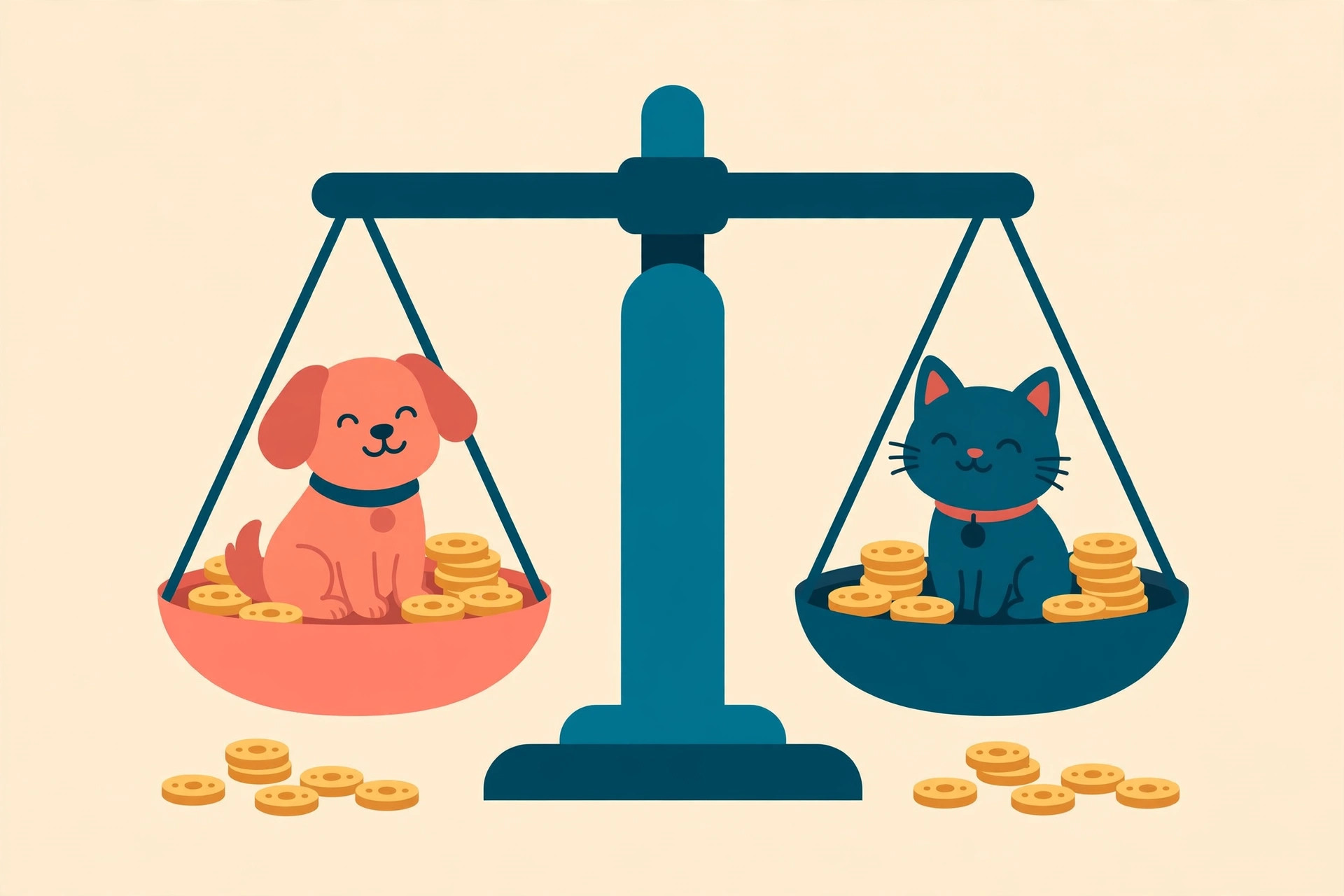
Two pets do not cost exactly twice what one pet costs — and three do not cost three times. Bulk food bags, shared toys, one car trip to the vet for two checkups, and a single pet sitter covering the whole crew all shave real dollars off the per-pet average. This budget planner adds up each pet individually, then applies an honest, adjustable multi-pet discount so your household total reflects how multi-pet homes actually spend.
The formula
Each pet starts from the same US-average defaults used in our single-pet calculators: small dog $180/month, medium $240, large $305, giant $375, cat $145. You can edit any pet's monthly figure to match your real receipts — the defaults are just a starting point. Then: Subtotal = sum of all pets' monthly costs. Discount = subtotal × discount % (only when you have 2+ pets and the toggle is on). Household monthly = subtotal − discount. Household yearly = household monthly × 12. The discount defaults to 10%, adjustable from 0 to 30%.
Why the discount exists
The savings are real and specific. Large-format food is cheaper per pound. One sitter charges less than two separate visits. Toys, beds, and carriers get handed down. Grooming appointments for two dogs often earn a multi-pet price. Ten percent is a conservative planning figure — experienced multi-pet owners in the same metro area often report 10–15%. If your pets have very different needs (a giant dog and a senior cat, say), slide the discount down; if they share nearly everything, slide it up.
Where the savings actually come from
It helps to see the discount as five small, concrete savings rather than one abstract percentage. Bulk food: the per-pound price drops at every bag size, and multi-pet homes burn through the big bags fast enough that freshness is never an issue. Shared gear: carriers, crates, grooming tools, and the toy box get amortized across more animals. Combined services: one sitter visit covers the crew, and many groomers and vets offer multi-pet pricing when you ask. Hand-me-downs: the outgrown crate and the barely-used bed find second lives. Fewer emergencies of inattention: experienced multi-pet owners simply get better at spotting problems early. None of these is huge alone; together they are the 10%.
When the discount does not apply
Be honest with the slider when your pets share little. A giant dog and a senior cat with very different needs may earn almost no bulk savings — set the discount near zero and let the subtotal speak. Conversely, three cats in one apartment sharing everything can justify pushing past the 10% default. The toggle exists so the math matches your household, not an average one.
Using the dashboard
The per-pet breakdown table shows who costs what, which is surprisingly useful: it is how most families discover that the "cheap" second pet is driving half the insurance bill, or that the big dog's food line dwarfs everything else. Add and remove pets freely up to six, rename them, and print the page for a household budget meeting. For the deep dive on any single animal, pair this with the Dog Cost Calculator or Cat Cost Calculator.