
Moving is stressful — and it's doubly confusing for the four-legged family members who have no idea why their whole world is suddenly inside cardboard boxes. Dogs and cats are creatures of routine and territory, so a move shakes both. The good news: with a little planning, most pets settle into a new home within a week or two, and many act like nothing happened.
This complete 2026 moving-with-pets checklist walks you through the whole journey in order — four weeks out, two weeks out, moving week, moving day, the trip, and the first 48 hours — plus what it all costs. Print it and tick things off.
4 Weeks Before: Start the Countdown
Start early and everything else gets easier. This is your logistics month.
- Gather your pet's paperwork. Collect vaccination records, microchip number, adoption paperwork, and any city registration. Put them in one folder (physical or digital) so you're never digging during the move.
- Update ID tags. Order a new tag with your new address and phone number now — they take one to two weeks to arrive, and you want it on the collar on day one.
- Check the rules at the new place. Renters: confirm the pet policy, weight or breed limits, pet deposits, and whether there's a one-time pet fee. Some buildings want a pet interview or a recent vet letter. Get it in writing.
- Book pet-friendly movers or transport. If you're hiring movers, ask outright whether they allow pets to stay in the home during loading — most prefer they don't. For long moves, research pet transport options early; slots fill up.
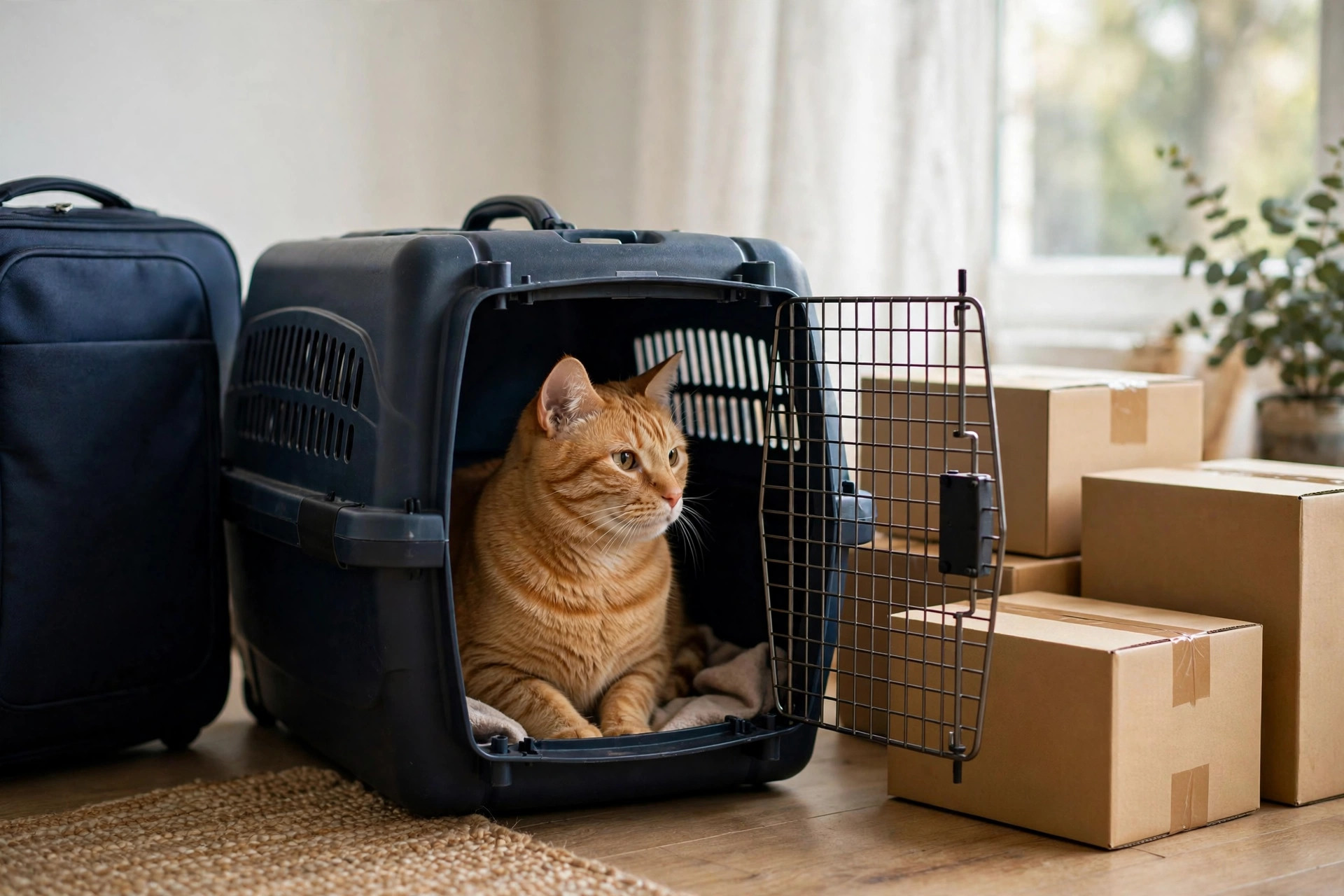
- Introduce the carrier. Leave the carrier or crate out in the living room with a cozy blanket inside, door open. Toss treats in for a few weeks. The goal: the carrier reads as "nap spot," not "scary box."
2 Weeks Out: Paperwork and Prep
Two weeks is close enough to feel real. Time to lock down details.
- Update the microchip registry. Call or log in to your chip registry and update your address and phone number. A chip with an old address is nearly as bad as no chip.
- Transfer vet records. Ask your current vet for a copy of records and a recommendation for a vet near your new home. The ASPCA's moving guide suggests finding the new vet before you move, not after something goes wrong.
- Plan the route. Driving? Map pet-friendly hotels — many chains accept pets for a small nightly fee. Flying? Confirm the airline's pet policy, carrier dimensions, and fees, and book your pet's spot early (airlines cap in-cabin pets per flight).
- Pack a pet essentials bag. This is the bag that stays with YOU, not the moving truck: three to five days of food, treats, water and a bowl, leash and harness, medications, waste bags, a favorite toy, bedding, and a calming item that smells like home.
- Talk to your vet about travel anxiety. If your dog or cat gets genuinely distressed in the car or on planes, mention it at a checkup. Your vet can explain the options — ask, don't guess.
Moving Week: Prep the New Place First
Got the keys early? Sweep the new home for pet hazards before any boxes arrive.
- Pet-proof room by room. Walk the new home at pet height: exposed cords, loose window screens, gaps under fences, accessible cleaning products, mouse traps left by the previous tenant, low shelves with breakables. Fix or block each one.
- Set up a "first room." Choose one quiet room to be your pet's home base. Put their bed, water bowl, litter box (cats), and a worn t-shirt of yours there. Let this room be fully ready before the chaos starts.
- Keep routines sacred. Amid the packing, keep feeding and walk times exactly the same. Routine is your pet's security blanket — protect it.
- Pack the pet's stuff last. Their bed, bowls, and favorite toys stay out until moving morning. Familiar smells reduce panic when everything else is boxed.
- Arrange moving-day care. The safest moving day for a pet is a day spent elsewhere: a trusted friend, a family member, or a daycare/boarding day. Open doors and stressed movers are an escape-risk cocktail.
Moving Day: Calm, Quiet, and Closed Doors
Moving day is loud, doors swing open constantly, and strangers walk through every room. Your job: make your pet almost unaware it's happening.
- Confine to one room or off-site. If they can't spend the day with a friend, set them up in the quiet "first room" with water, bedding, and a radio on low. Put a big "DO NOT OPEN — PET INSIDE" sign on the door and tell every mover.
- Move the pet's essentials yourself. Their bag, food, and bedding ride in your car, not the truck. You want familiar things within arm's reach tonight.
- Double-check before the truck leaves. Cats especially love hiding in the one closet you haven't packed. Do a full sweep of every room, closet, and the garage before locking up the old place.
- Arrive with the pet last. Let the movers unload first, then bring your pet into a home that already smells a little like you. Set up their corner immediately: bowl of water, bed, favorite toy.
- Keep the first evening boring. No tours, no visitors. One quiet room, dinner at the usual time, early night. Boring is a compliment tonight.
The Journey: Driving or Flying With Your Pet
The trip needs its own plan — and budget.
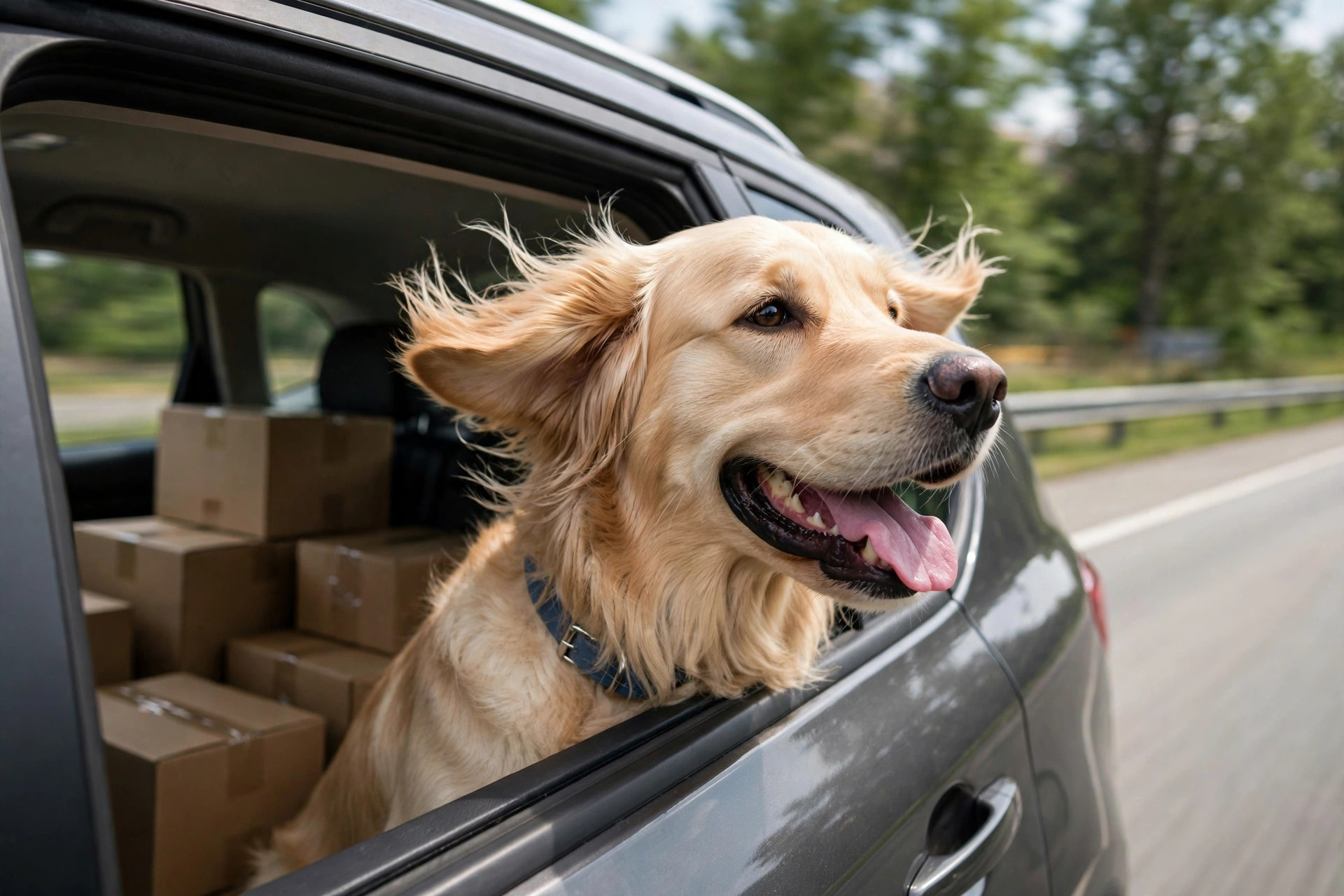
Driving tips: Secure your dog with a crash-tested harness or a crate strapped in the back seat; cats ride in a sturdy carrier, never loose. Stop every two to three hours for water and a stretch. Never leave a pet in a parked car, even "for a minute." Feed a smaller meal than usual before departure to keep stomachs settled.
Flying tips: Most airlines allow small dogs and cats in cabin in an airline-approved carrier that fits under the seat — typically under about 8 kg including the carrier, though rules vary by airline. Larger dogs fly as checked baggage or cargo. Book the pet's reservation as early as possible, arrive early, and bring the health certificate your airline requires (usually issued within 10 days of travel). The VCA's pet travel guide is a solid pre-flight read.
Budget the trip: in-cabin airline pet fees typically run $95–$200 each way in 2026; cargo runs higher, and pet-friendly hotels usually add $25–$75 per night. Add food, gas, and one contingency night — moves love surprises.
How Much Does Moving With a Pet Cost in 2026?
Pets add a real line item to a moving budget. Here are the typical 2026 ranges:
- New ID tags: $8–$20
- Pet deposit / fee at a new rental: $200–$500 (deposit) or $100–$300 one-time fee
- Daycare or boarding for moving day: $30–$75
- Pet-friendly hotel surcharges: $25–$75 per night
- Airline in-cabin pet fee: $95–$200 each way
- New vet registration / checkup: $50–$150
- Replacement gear (bowls, bed, scratching post): $40–$150
- Microchip registry update: often free, some charge $15–$20
All in, budget an extra $200–$800 for a local move and $500–$2,000+ for a long-distance or flight-based move. Want to see how the move fits your overall pet budget? Run the numbers through CalcPet's cat cost calculator or browse our cat monthly cost breakdown to keep the big picture in view.
The First 48 Hours in Your New Home
You made it. Now help your pet believe this strange place is home.
- One room first. Start your pet in their ready room with familiar smells. Let them explore the rest of the house gradually over a day or two — room by room, at their pace.
- Recreate the old routine instantly. Same food, same bowls, same feeding times, same walking route schedule. Familiar rituals tell your pet "we're fine."
- Scatter familiar scents. Unwashed blankets and their old bed are magic. Place them in the spots you want your pet to claim — bed in the bedroom corner, blanket on the couch.
- Supervise the yard. Check the fence for gaps before the first off-leash moment. New smells are exciting; an open gate is dangerous. Keep the first outings on-leash.
- Watch and wait. Some hiding (cats), clinginess (dogs), or a skipped meal is normal for a day or two. If eating, drinking, or litter habits stay off beyond that, call your new vet.

Frequently Asked Questions
Should I keep my pet home or send them away on moving day?
Away wins every time: a friend's house or a daycare day keeps your pet out of the noise, away from opening doors, and far from movers' feet. If that's impossible, one closed, signed room with water and bedding is the backup plan.
How do I move a cat that hides when strangers come over?
Confine the cat to a single room days before the move and keep their carrier there with the door open. On moving day, load the cat into the carrier in that quiet room before movers arrive. Do a closet-by-closet sweep of the old home before you leave — hiding cats are escape artists.
Can I fly with my cat or dog in the cabin?
Most major airlines allow small pets in cabin in an under-the-seat carrier (usually up to about 8 kg including the carrier) for $95–$200 each way in 2026. Book early — airlines cap in-cabin pets per flight — and confirm carrier dimensions with your airline, since rules vary.
How long does it take a pet to adjust to a new home?
Most dogs act like themselves within a few days to two weeks. Cats take longer — many hide for two to seven days and take three to four weeks to fully relax. Keeping routines, scents, and furniture placement familiar speeds everything up.
Do I really need to update the microchip registry when I move?
Yes — this is the single most skipped step, and it matters most exactly when a move makes pets most likely to slip out. A chip linked to your old address delays reunion by days. Most registry updates are free or under $20.
Your Move, Handled — One Tick at a Time
Moving with pets is just a lot of small things done in the right order: paperwork four weeks out, prep the new place before the boxes arrive, a calm moving day, then the old routine from day one. Do that, and the new house feels like home — to all of you — within days.
Moving with a puppy in the mix? Our new puppy checklist tool makes sure nothing gets forgotten in the chaos. Curious how old your co-pilot is in human years? Try the dog age calculator. And for everything else pet life brings, start at the CalcPet homepage.